How the world works
How the world works
Author: Bhanu Prakash Mallya
Date: 30 December 2025
Introduction
The human mind works on memory and prediction. It is a prediction engine which uses its memory of past events and knowledge obtained in the processing of these events in order to make judgement calls about those events and even to contemplate in his imagination, events that have not yet taken place.
This allows for the development of concepts which, through communication with others of the species, allows members of the species with access to any betterment of concept thus generated in the mind of an individual, to improve their own understanding of such concept or to find innovative uses for such concept.
This has been the development of all of human history over several million years. Every tool ever developed, from stones made of flint, to fire, the wheel and every idea ever conceived such as that of god, language, whether oral or written, rituals pertaining to everyday life in every culture or other stories and myths that evolved over time, have their beginnings in the mind of some individual who chose to share this with other members of the society around him.
Over the last couple of hundred years, there have been breakthroughs in mathematics, science and technology, and the arts that have far outpaced anything over the last few million years. Yet, the world is preoccupied in tribal dilemmas that should have evaporated with this significant advancement.
It seems to me logical to assume that this is because our primate evolved brains have been given things which we take for granted and apply more to the establishment of a similar status quo as has been evolving in human societies for centuries.
Change is hard. It is extremely difficult to change ideas and firmly held beliefs when you are indoctrinated from birth into a certain world view. Although very few individuals do manage to break free of some dogma, even they are trapped in the collective society where they must reside. It remains to be seen what the effects of the current pace of development will have on human societies towards the end of the 21^st^ century and into the next, given pressing issues like climate change and demographic downturns in many industrialized nations.
It has been debated that scientific theories only approximate reality and that the current wisdom of the day is but knowledge that could be falsified in future. While this is true to some extent, it is also true that the current state of scientific affairs has led to technological revolutions that are unprecedented in history. Some raise comparisons to the Europe of the early 20^th^ century, when many technological marvels of the time reset the public’s aspirations and way of life over a relatively short period of less than 30 years. But this is not to be confused with the recent advances, which taken over a 30-year period, have globalized the world in ways that haven’t been possible in the whole of history. The very idea of nation states stands up for debate when it is possible for individuals to now break free of social dogma for good and contribute to the global economy in much smaller groups.
As a species, humans have gained knowledge primarily through three means:
a) Instinctively
b) Passing of knowledge down through the generations
c) Making deliberate enquiries
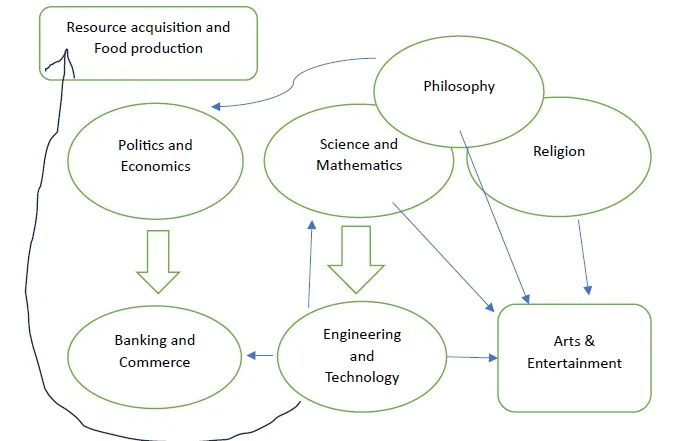 Figure 1. The core of modern civilization
Figure 1 attempts to break down human endeavour into broad classes and show some of the relationships between them. A thick arrow between A and B indicates that A directly leads to B whereas a thin arrow indicates that B may or may not borrow ideas and tools from A. While all the thin arrows should actually be double headed, I have emphasized the direction in which the flow generally occurs.
All these aspects considered together at various levels gives rise to different social units in a society. The largest of these could be considered at the international level followed by national, community, family and other intermediary units. Security is not included in the figure as it is a governing mechanism to protect the entire social unit under consideration and acts according to directives provided by a codified set of rules upheld by a system of courts / monarch / authority. These laws provide guarantees to actors in the social unit of certain terms upon which they may lead their fulfilling lives as long as they are living or interacting with that social unit. Actors in a social unit exchange products and services with each other and with actors in other social units. This gives rise to an economy. Some features of an economy are discussed below.
Economic transactions
Legal space
A legal space is a formally recognized set of procedures and rules according to which social transactions, including economic transactions may take place.
A legal space exists at various levels of the social order, with fuzziness at the highest global levels, and stricter as the social orders segregate into various political units, usually nation states and their subdivisions.
Economic system
An economic system is created by a legal space within which actors can participate in order to improve their economic outcome.
Actors in an economic system can interact with actors in other economic systems that may have a similar or different legal space.
It becomes the goal of most actors within an economic system to improve their economic outcome.
Individual actors
When the actor is an individual, he may be motivated both by selfish pursuits of bettering his own experience of life and also by bettering the life of others.
Corporate actors
When the actor is a corporation, it may be motivated by preexisting demands on economic value to be returned to actors who invested in the setting up and operation of the corporation and also to be able to grow in size such that it can generate more economic value.
Government actors
When the actor is a government of a nation state, it is usually motivated both by the intention of providing better services to its citizens and by the intention of retaining power over the government.
When the actor is the collective idea of a nation state, it is motivated by only the intention of providing better services to its members. This, being economically unrealizable, exists only as a figment of anyone’s imagination.
Essential elements of a functioning economy
Value chain
A set of economic transactions that add value at each link in the chain such that the set as a whole becomes economically viable.
Sustainability
An economically viable value chain may or may not be sustainable
-
Unsustainability arises when any of the links in the value chain fails to account for costs both in terms of present value and future value.
-
Unsustainability also arises when the value chain is economically viable but has negative consequences for other value chains which are required for the sustenance of both economic and social order over the long term.
Product
Something that a user can create either in isolation or in coordination with other contributors using some input to produce some output which can be either for restricted consumption or wide distribution potentially having some monetary value that customers would be willing to pay.
A product may be of several types:
-
Acts as a platform for:
-
The creation of new products and services.
-
An ecosystem of services and products that let users access those services.
-
-
Is intended for end user consumption and either is lost in the act of consumption, is reused by the end user for an indefinite period, or is redistributed by the end user to someone else forming a limited chain of distribution.
-
Is custom built for a particular use case that is also heavily protected by intellectual property rights and protections.
Service
Something that is offered for use to users either for free or for a recurring fee in order to achieve some functionality relevant to the life of the user.
Distribution
A product or service may be offered to users in various ways:
-
A B2C product is one that is directly marketed and sold to individuals or small businesses.
-
A B2B product is one that is directly marketed and sold to large enterprises.
Marketing
The process of finding an ever-growing set of users in the current economic system or even in different economic systems for the product or service. This is usually done in conjunction with advertising and sales to drive revenue growth.
Advertising
The use of psychological aids to convey the utility of some product or service to a target audience, some of whom are expected to purchase or enquire about the product or service being offered.
Sales
The process of cutting deals with customers who need customized deployments of said product or service and are already the target of specific Marketing and Advertising campaigns.
Economy
The creation and consumption of products and services comprise the economy.
Money
Money enables the exchange of products and services by actors within an economy
Currency
A unit of currency, commonly counted in fractional multiples of the unit, is used as money.
Value of a currency
The buying power of a currency is its ability to facilitate economic transactions. Some units of money are required to perform 1 economic transaction.
Exchanging currencies with each other
Units of different currencies may be exchanged with each other depending on a dynamic exchange rate.
A currency may gain or lose its value depending on the projected outlook of the market as to the ability of the currency to be able to facilitate economic transactions.
An actor may have access to money in different currencies.
Business
One or more domains of economic activity.
Business model
The process by which a company operates in a given business.
Business plan
A set of artefacts detailing some way of utilizing a certain amount of investment corpus using one or more business models.
Company
An entity that utilizes one or more business plans in order to create the product(s) detailed in the business plan by providing employment to a selected group of individuals some of whom may be in-house and some of whom may be hired on contract with a service provider (which is another company) of labour services.
A distinction here is worthwhile to note:
A company that is primarily involved in the creation of a new product or service is called as a product-based company.
A company that is primarily involved in the employment of individuals for the express purpose of leasing out their time on contract basis to other product organizations is known as a service-based company.
A company that provides some essential service/product to the economy of a nation state is called as a public sector company.
A company that is involved in economic activity, but which is owned and operated by a group of private individuals is called a private sector company.
Stages of growth of a company
A service-based company can grow quite large by headcount as it expands to service customers located in various geographic regions and maintains a certain leadership in key domains, which is usually accomplished by the regular enhancement of their employees’ skills keeping in mind current market conditions.
A product-based company, usually starts out as a startup which goes through the following common stages:
-
Initial prototyping of the product, usually either by the founder himself or in collaboration with a co-founder or a small group of individuals who together set the direction of the product both technically and in terms of future growth. At this stage, a Minimum-Viable-Product(MVP) is created. This is called an early-stage startup which is usually bootstrapped.
-
After raising some additional capital, the MVP is updated with a richer feature set and deployed to end users. Then, various roles in the company are created as the demand for the product increases and additional support functions are added for the better management of both the needs of the employees and users.
-
If the product is successful, the next stage of growth usually comes in the form of scaling the product to serve an ever-increasing number of users, which could amount to several billion users if it is a B2C product. This provides sufficient challenges to the engineering team who must build features to scale, deploy the same and monitor and debug issues arising due to this.
-
Given that the company’s product has reached a large audience of either individuals or enterprises in the case of B2B, the company may decide to diversify its offerings by investing in additional research and development by means of utilizing the profits earned or by raising additional capital by various means.
-
Also, a company may have grown to command some novelty in the market, which would make it attractive for competitors to purchase the company itself. This provides an exit avenue for serial investors and entrepreneurs who move on to the next thing to build.
Employee
An individual who by mutual agreement with a company provides the service of labour in return for agreed compensation, usually in the form of money.
A note on regulation
While different socio-legal systems provide for a different balance between public and private sector enterprise, there is in the world today a commonly held belief that greater private sector enterprise is more rewarding than a tightly controlled public sector. It has been noted in various cases around the world that giving private enterprise the necessary leeway in pursuing growth can and does lead to general economic prosperity. It has also been noted that private enterprise is susceptible to an adverse climate of greed, disruption by new technology, and by geopolitical events and natural disasters which could not be accounted for in the race to scale.
It has been remarked that the products and services deemed essential to the survival of individuals in an economy are generally better off being either heavily regulated, or disseminated through public enterprises.
How much regulation is enough to both act as an incentive to start private enterprise and keep it checked at various stages of growth is mostly an experiment that can be studied on a case-by-case basis using examples from around the world. There is no silver bullet here, and as the world has progressed by leaps and bounds over the last century, ideas involving different ideologies have been implemented in countries everywhere.
It remains to be seen whether there is any model that serves to enrich the lives of individuals in a society in a wholesome manner.
Drivers of economic activity
-
Demand for a product or service that exists in the economy
-
Demand for a product or service that does not yet exist in the economy, but is generated by the introduction of a new product or service that has not yet existed.
-
Greed by some actors to gather excessive wealth by either the direct manipulation of economic data or by persistently exploiting loopholes in the prevailing socio-legal system.
The Market
Products and services are offered to consumers at some price, which may change over time.
If there are enough consumers who are willing to pay the prevailing price of the product or service, then the said price can be sustainable for the actor who provides such product or service.
Some interesting dynamics take place here:
The “enough number of consumers” as mentioned above, could be a very small number of actors who participate in the overall economy or it could be an ever-growing number of very large quantities. This leads to pricing strategies as follows:
A premium brand can target a smaller fraction of overall market participants and earn large profits in spite of having overall lesser sales than competing products.
An economy of scale can be built by offering a product or service at a significantly reduced premium which encourages the participation of a large number of actors, thereby keeping costs low for all consumers.
When an actor in a market has access to both large amounts or cash reserves and a monopolistic hold on some part of the market, the actor may or may not choose to indulge in anti-competitive practices. Some such practices are:
-
Artificially increasing the price of the end product in order to maintain premium branding and the rapid acquisition of other startup companies which may be bringing competitive products to market thus potentially eroding market share of the product.
-
Manipulating the producer of the product to distribute the product at a certain price across all sales channels if the producer wishes to use the services of the actor.
-
Manipulating visibility of the competitive product on the actor’s platform and/or attempting to sell similar products manufactured through a value chain owned and operated by an entity belonging to said actor.
An actor in a market may choose to merge with another actor in the same or different market thus increasing the market share of the combined entity and raising the potential for monopolistic behaviours if left unchecked by some regulatory authority within the socio-legal system.
A note on pricing strategy
Sometimes, companies may price a product at lower than cost of production or only at marginal profit or even free of cost to the consumer. This then enables the company to:
-
Incentivise the consumer to purchase add-ons which are required for the continued operation of the product over a long term. The pricing of these add-ons are typically at a much higher level than the original product in relative terms.
-
Creating artificial psychological incentives for the consumer to purchase add-ons on a regular basis.
It has been theoretically proven that a group of companies which share a similar pricing strategy of using add-ons, do not have an incentive to reveal this information in an unambiguous and upfront manner to any consumer of their own or of competing products.
Some notes on security
Security in general
-
Protect the consumer, producer or distributor of some product or service from malicious actors or from accidental use of the same by a valid end user.
-
Protect individuals and property within the confines of some socio-legal system according to rules and powers granted by the same socio-legal system.
-
Protection afforded to various entities by individuals or groups of individuals or governments in some socio-legal system that have long term effects on the future sustainability of life on Earth.
Security in technology
Technology enables greater ease of distribution leading to economies of scale, faster processing of documentation, efficient manufacturing processes, the development of new scientific tools that enable progress in the basic sciences.
At each of these junctures, since there is and always will be actors who wish to exploit inefficiencies in the technology as so far deployed, in order to either profit directly or in order to cause harm to a certain section of the population, there have been developed various solutions to enhance security.
Thus, security in technology is a technology that helps to keep the particular technology safe from bad actors.
Pragmatic Finance
Financial transactions are carried out by individuals, economic entities and political entities.
Personal finance
When applied to individuals, it is known as personal finance.
An individual has a certain net worth at any given time.
The net worth of an individual is the total value of all assets owned by the individual minus the total debt held by the individual.
The credit worthiness of an individual as decided by various financial debt providers is a function of various factors, which include:
-
Timely repayment of previously held debt which displays attention by the individual to the maintenance of a good credit history.
-
One or more reliable sources of income that the individual can prove as an income stream.
-
The current liabilities of the individual on an ongoing basis.
-
The present market value of any asset that is held by the individual which could be used as collateral for a secured loan. These assets being tangible things such as land, housing, gold, automobile, holdings of shares in publicly traded equities either by way of common stock or mutual funds.
The credit rating of an individual as reported by various aggregators of such information, generally are concerned only with the credit history of the individual as depicted by timely repayment of past debt, not having taken on an excessive amount of debt, and any financial settlements that have taken place with previous lenders. Attention is also given to the utilized limit on credit cards.
Several social factors come into play when an individual is considering his personal finances:
-
Some prefer to save a large portion of their income for future consumption.
-
Among the savers, a small number of individuals may choose to invest a part of their savings into financial instruments that generally attract a higher rate of return than a savings bank account. It is unadvisable to keep savings in the form of liquid cash, as inflation would eat at its value at a far faster rate than even a bank account.
-
Some do not like the idea of personal financial debt at all, and are altogether reluctant to take on debt in any form, which could be something like paying for a product on zero cost Emi, or taking on a loan to finance skill development which has higher employment/entrepreneurial value in the future.
-
Some end up taking on too much debt, financed by easy access to credit cards, fintech applications and unsecured lending by both banks and non-banking-financial-corporations. This may be for several reasons:
-
The individual is unaware of the inherent risks involved in being unable to repay the debt in a timely manner.
-
The individual is aware of the risks but has confidence in himself that the spending done now can be paid for by future income streams, which are only going to be higher than the current income.
-
The individual is unaware of situations when:
-
The abilities of the individual to generate such future income streams are questioned by what usually turns out to be an unfair market.
-
The introduction of new technologies or changes to the value chain of economic activity which render the services provided by the individual to be of a lesser value than before and is thus outright replaced by the said technology.
-
If the individual is running a small entrepreneurial venture, say a small business then in addition to the above, certain additional risks are inherent:
-
The delayed payment or outright default by customers of the business.
-
The business not generating revenue as per plan.
-
Operational issues in running the business due to unforeseen circumstances.
-
Investing from an individual perspective
In personal finance, an individual is usually some person who has a monthly income stream, called as a salary. Some individuals who identify that saving for a rainy day could be useful, may prefer to budget their monthly income into various buckets. This rather disciplined approach, while appearing good in theory, becomes cumbersome, prone to misalignment with changing needs, and short sighted in terms of the rapid pace of socio-economic progress.
While there are any number of advisors and influencers who advocate certain rules or formulas or excel sheets for calculating the future value of a given set of investments, it is to be noted that the prudent investor, once he has a basic understanding of how things work, can more or less reliably make investment decisions that are well suited to his particular circumstances, no matter the age, income or place in society.
The primary problem with following the advice of other people religiously in financial matters is that it does not provide the individual with the direct experience of being accountable for any gain or loss that is incurred by way of investment. These experiences serve to strengthen the individual’s outlook on socio-economic matters and provide an avenue for further enhancement of his approach to financial matters in the future.
If you are relatively young, then it is also a better idea to keep updated of relevant skills and / or pursuing a higher education credential that would directly lead to greater income from employment gained by trading your day time work hours for money. Thus, you would have access to a greater amount of money that you can play with and take greater risks in the initial stages without becoming effectively bankrupt. This would work even if you have to take on debt to pursue such skill, but only if the skill and experience gained while acquiring it, has the potential for increased demand in the year you plan to pursue employment opportunities with that credential. Now, it would be fair to say that while this has worked generally in the past, the fast approaching productivity enhancements implied by the rapid dissemination of artificial intelligence, could mean that the credential you work to obtain, whether it be a regular college degree or a higher graduate / phd degree would be of significantly less value in real terms unless you have a remarkable level of skill in the application of such knowledge either through an employer or possess genuine entrepreneurial ability.
Avenues available to the individual investor
The generally accepted wisdom is to play it safe. A house is a safe investment. Gold jewellery is a safe investment. Shares of company X is a safe investment. A fixed deposit in a large bank is the safest investment. Government provided saving schemes are the best investment.
What should the individual investor, who may be starting his journey at any age, be inclined to do?
I have come across sage advice, advocating specific techniques for partitioning current corpus and additional income streams into specific investments depending on your age and risk profile. I believe these to be quite arbitrary and the prudent investor must understand that there is no specific risk profile / age to be able to make sense of what is going on in the world and thus making the right investment decisions.
Approach
We will look at not only the best means of identifying sources of future wealth generation in the economy, but also at how to best to deal with the psychological implications of having committed large sums of money (in relative terms) to a decision that can no longer be reversed.
At any given period of time, a large number of products are being produced and consumed by various actors who transact using money in some currency.
When looking at a given product, I think it becomes essential to ask the following questions:
-
What does the product enable its user to do? Is it something that enables the user to do something new, enhances some existing social function or employs unique ways of manufacturing or distribution which have an impact on cost?
-
Does the product have competition in the same market? What about other markets?
-
Is whatever the product is intended to be used for going to be relevant in a future time frame? Say, over a 5 year period, or a 10 year period?
-
Does the company whose product you are going to bet on, have a history of great products?
-
Is the company providing the product / service in a market where such a thing is not already available? If so, it has a head start. Can it be reasonably assumed that the company will maintain its dominance in the given market and / or expand to new markets?
-
If the company has a monopoly on the market, why does it have a monopoly? What factors contributed to it having that monopoly and can it be reasonably assumed that its position will remain so for the foreseeable future?
The individual may have preexisting bias towards one or more sectors of the economy which he feels more comfortable to both judge and be misled by due to his bias. He may also possess extensive domain knowledge based on industry work that he has done. I think it becomes important to preserve one adage of sage wisdom, which is to diversify your portfolio. It is up to the individual, to make impromptu decisions, based on current market conditions, how the distribution should be done. Thus, while at a younger age, one may prefer to remain passive, and have a basic investment strategy that blindly allocates some percentage of your income into an avenue that you think will be good for the growth of your investment, in later years, you may or may not find it useful to get into the nitty gritty details of how to make your money work for you.
In any given economy, there are the following major concerns:
-
Providing adequate housing and sanitation, affordable healthcare, nutritious food, clean water, clean air to its citizens.
-
Providing infrastructure for the generation of energy
-
Security for the protection of a social unit.
-
Social security which could be retirement benefits, insurance and the like.
-
Providing adequate educational opportunities to students of any age.
-
Providing employment to people who are either starting out in their careers or looking for a change.
Corporate finance
An economic entity engages in economic transactions of various natures. Depending on the size of the entity, it is generally classified as follows:
-
Small business / establishment
-
Medium scale business
-
Large enterprise
The nature of economic activity indulged by these entities generally varies and yet have certain common elements, such as:
An economic entity provides employment to individuals who perform certain roles within the entity.
It may procure raw materials for manufacturing products and / or use the products or services of another firm for the procurement and / or manufacturing of the product.
It may raise capital in order to:
-
Maintain an inventory of products that are offered for sale.
-
Invest in research and development of a new product / service.
-
Optimize logistics / processes involved in the manufacture and / or distribution of existing products.
-
Hire additional people.
An economic entity hires additional people for the following reasons:
-
A new hire may come in at a certain logical level in the entity, bringing in experience or skill as applicable at that level and beyond.
-
New hires add to the headcount of the entity and require various support functions to be enhanced, which may include the construction of new offices and roles where additional oversight may be required.
-
To reduce the workload on the back office where documentation needs processing.
-
As an economic entity grows in size, it may find it necessary to have on staff permanent employees who can deal with extraneous events such as the enforcement of regulatory compliance policies, legal advice and emotional and physical well-being of its employees.
An economic entity may generate capital in various ways:
-
Fully funded by the founder. The founder may be an individual, group of individuals or other entity. This is generally called a bootstrap.
-
Partially funded by the founder and the rest by interested Angel investors who invest their capital in an early-stage startup in exchange for some percentage ownership of the company.
-
Partially funded by the founder and the rest by debt raised from various financial institutions such as banks.
-
As the company grows either in real terms or in projections of future revenue, its valuation increases, and various other sources of funding may be open to the founder through Venture Capital raised in rounds of increased valuation, and/or by means of an Initial Public Offering (IPO) in some equity market. VC funding involves sharing a concentrated amount of ownership with the VC, and IPOs allow the founder to distribute ownership in the public market. If the perception of the public is favourable, the shares of the company are traded at a higher price than it was issued at, raising the value of all the shares that have been allocated by the company, which may or may not be publicly trading at a given point in time. Thus, a higher share price, is beneficial primarily to holders of large quantities of such shares, usually the founder and early investors. It is also beneficial to both retail investors and other investors who may be holding large quantities of such shares. Equity trading is NOT zero-sum.